How to Use DeepL Aure v2 to Sell Multilingual Voiceover & Translation Services (Freelancers' Guide)
By DIGGZA Team · Published · 8 min read
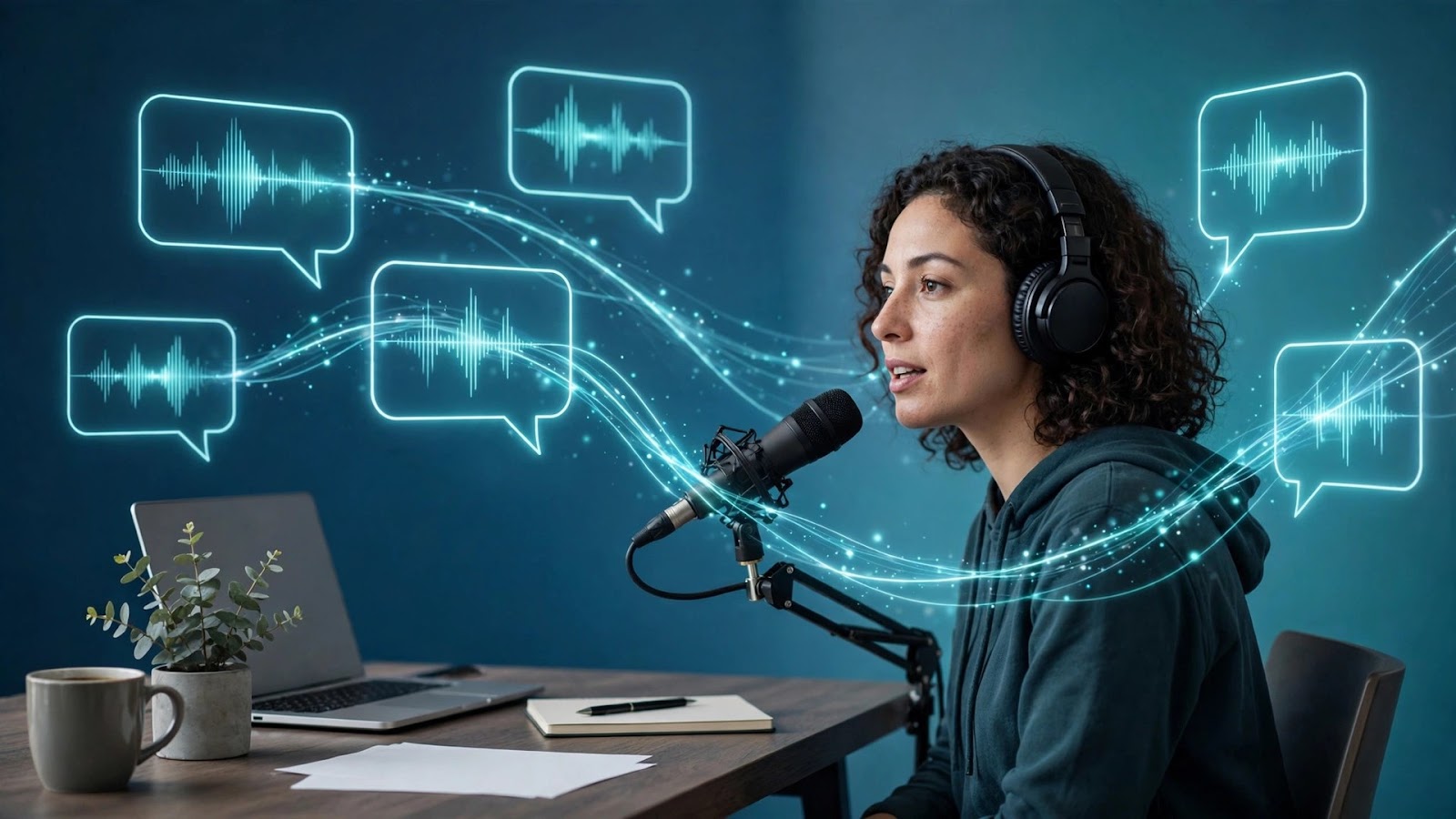
DeepL launched Aure v2 on 26 November 2026 at its Unmute Summit in Tokyo. It is an end-to-end speech-to-speech translation model: you speak in one language, and the other person hears your words in theirs — with your rhythm, emphasis, and emotion carried across.
For freelancers, that is a service you can sell. Live translation, voiceovers, and dubbing used to need a bilingual human or a slow, multi-tool workflow; Aure v2 compresses that work into a single step. This guide explains what it is, how to use it, and how to package it into paid services.
What Is DeepL Aure v2?
Aure v2 is DeepL's second-generation voice translation model, built for DeepL Voice. The original Aure launched only fifteen days earlier, on 11 November 2026 — a fast update that shows how seriously DeepL is investing in voice.
How it works
Most speech translation tools work in three stages: transcribe the speech, translate the text, then read it aloud with a synthetic voice. Each stage adds delay and strips away something — a pause, a stressed word, a change in tone.
Aure v2 is an end-to-end model: it translates directly from speech to speech in a single step, with no intermediate text stage. That is why the output can preserve the speaker's rhythm, intonation, emphasis, and emotion instead of flattening everything into a monotone read.
What's new vs the original Aure
According to DeepL, Aure v2 cuts median translation delay by about 50% versus the original Aure, and improves accuracy and expressiveness. DeepL also reports 32% fewer English-to-Japanese translation errors than Google Gemini 3.5 Live Translate in its internal testing.
Honesty note: these are DeepL's own internal benchmarks, from a November 2026 study using one-minute recordings of real speech across ten language pairs. They are not independently verified — treat them as the company's claims, and test a live session in your language pair before promising quality to a client.
Languages supported at launch
Aure v2 supports six languages at launch, for both input and output: English, German, French, Spanish, Japanese, and Korean. Both sides must use languages from this list — there is no automatic detection yet, so you choose the pair yourself. More languages are coming, says DeepL.
One warning for Indian freelancers: Hindi is not supported yet, and neither are Portuguese, Italian, or Arabic. If your clients work mainly in Hindi, Aure v2 is not your tool today — but for clients in the US, Europe, Japan, or Korea, the six languages cover a large share of paying demand.
Why Aure v2 Matters for Freelancers
The demand signal
DeepL says total voice minutes on DeepL Voice grew roughly 8x year over year in Q3 2026, with translated meeting minutes up about 7x. These are DeepL's own figures, but the direction matches what freelancers see on marketplaces: clients want multilingual audio and video work far more often than a year ago. Creators want content in more languages, businesses want sales calls with overseas buyers, and course sellers want lessons dubbed. The bottleneck has been that good multilingual voice work was slow and expensive. Aure v2 lowers that barrier, and early movers can capture the work before it becomes a commodity.
Services you can sell with it
- Live meeting translation: join a client's call as the translation layer between them and an overseas partner or customer.
- Multilingual voiceovers: produce translated voice tracks for explainer videos, ads, and e-learning content.
- Video dubbing: re-voice a creator's video into another language, keeping the speaker's tone and pacing.
- Client-call support: translate on sales or support calls in real time, so a small business can serve customers it could not reach before.
- Event translation: provide live translated audio for online events, launches, and training sessions.
Sell the outcome, not the model — clients care that their Japanese customer understood the pitch.
How to Use DeepL Aure v2 — Step by Step
Getting access
Aure v2 is available through DeepL Voice in three places: Online Meetings, for video calls; In-Person Conversations, for face-to-face meetings; and the API for Voice, for building translation into your own tools. For supported languages it is auto-enabled — no extra setup — and DeepL has announced no pricing change, so check current pricing before quoting a client.
Setting up a translated meeting
- Confirm the language pair is supported, and tell both sides what to expect.
- Pick the right mode: online meetings for video calls, in-person for face-to-face conversations.
- Set the languages manually — there is no auto-detection yet.
- Test the audio first — a one-minute test before the real call catches most quality problems.
- Speak naturally, but clearly, and pause between thoughts so the translation can keep up.
- Monitor and correct mistranslated names, numbers, or technical terms in the moment.
Best practices
- Use a good microphone — a headset beats a laptop mic, and clear input is the cheapest quality upgrade.
- Keep the room quiet. Noise, echo, and overlapping voices all hurt accuracy.
- Brief the speakers: complete sentences, no heavy slang, names and numbers spelled out.
- Check the output before you deliver — for recorded work, listen to the full track once first.
- Be honest about the limits, such as fast overlapping speech or technical jargon.
How to Package It as a Freelance Service
Service ideas and pricing angles
There are three natural ways to price this work:
- Per minute of translated audio: quote a rate per finished minute, with a minimum charge per project.
- Per meeting: a flat fee for live translation on a call, usually with a one-hour minimum. Works well for sales calls and client meetings.
- Per project: a fixed price for a defined deliverable, such as dubbing a ten-minute video into Spanish. Clients like fixed prices — no surprises.
Do not compete on the lowest price: a fair rate, clean audio, and a reviewed output win repeat work over someone cheaper but careless.
Where to find clients
- Upwork and Fiverr: create a gig around a specific outcome — for example, "I will dub your YouTube video into Spanish". Clients search for outcomes, not tools.
- LinkedIn: post a short demo of a translated clip and explain the service — business owners who take international calls are the ideal audience.
- Direct outreach: email small YouTube creators, course sellers, and export businesses in the six supported languages, and show them a 30-second sample of their own content translated — a demo beats a pitch.
- Your existing clients: if you already do translation, voiceover, or video work, tell your current clients first — they already trust you.
Tools that complete the workflow
Aure v2 handles the translation, but a professional deliverable needs more than a raw track. For voiceovers that need a consistent, polished voice across languages, ElevenLabs Creator clones and refines voices so the translated audio sounds like a real presenter. For turning translated scripts into listenable audio, Speechify Premium fits the same stack. Before anything reaches a client, Descript Creator edits and polishes the translated audio and video. Offer a complete package: translation, editing, and a clean final file — the difference between selling a tool's output and selling a service.
DeepL Aure v2 vs Alternatives
| Option | How it works | Strengths | Limitations | Best for |
|---|---|---|---|---|
| DeepL Aure v2 | End-to-end speech-to-speech translation in one step | Preserves rhythm, tone, emotion; low delay; auto-enabled | Only 6 languages at launch; benchmarks not independently verified | Freelancers selling translation and voiceovers |
| Google Gemini Live Translate | Real-time translation inside Google's ecosystem | Google product integration; broad language coverage | DeepL claims fewer English–Japanese errors for Aure v2 in its own tests | Users already inside Google Workspace |
| Traditional dubbing workflow | Translator writes a script, voice actor records it, editor mixes it | Highest control over nuance, branding, and performance | Slow and expensive; needs a voice actor for every language | High-budget brand films |
| Three-step AI pipeline | Transcribe, then translate text, then text-to-speech | Works with many tools; flexible and widely available | Added delay at each step; tone and emotion are usually lost | Quick drafts and internal use |
The honest summary: Aure v2's advantage is not the number of languages — it does not lead there yet. It is the quality of the voice that comes out the other side.
Limitations to Know Before You Sell It
- Only six languages at launch — Hindi, Portuguese, Italian, and Arabic are not supported yet, so do not promise a client a language it cannot handle.
- Performance claims are DeepL's own. The 50% delay and 32% error figures come from its internal study and are unverified — test in your language pair before quoting quality.
- No automatic language detection. You select the pair yourself, and both sides must stay within the supported six.
- Good audio is not optional — noisy rooms, cheap mics, and overlapping voices degrade the output, whatever the model can do in ideal conditions.
- It is a translation engine, not a finished product. Raw output still needs review and polish before it is client-ready — budget that time into your price.
FAQ
Is DeepL Aure v2 free?
Aure v2 is part of DeepL Voice, and DeepL has announced no pricing change. Whether you can use it depends on your plan — check current pricing before selling services built on it.
Which languages does Aure v2 support?
Six at launch: English, German, French, Spanish, Japanese, and Korean, for both input and output. Hindi is not supported yet, with no dates announced for more languages.
Can I use Aure v2 for YouTube dubbing?
Yes, with a workflow around it. Aure v2 produces the translated speech; you still need to record it, sync it to the video, and edit the result — pair it with an editing tool such as Descript, and listen to the full track once before publishing.
Do my clients need a DeepL account too?
Not necessarily. For live meetings, run DeepL Voice on your side and act as the translation layer. For API workflows, you control the integration and deliver the finished audio. Confirm the setup for each job in advance.
How is Aure v2 different from the original Aure?
DeepL says Aure v2 has about 50% lower median delay and better accuracy than the original Aure, launched 11 November 2026 — but these are DeepL's own benchmark claims, not independently verified results.
Conclusion
DeepL Aure v2 gives freelancers a genuine new service to sell: real-time speech translation that keeps the speaker's human qualities. The opportunity is real — but so are the limits: six languages, unverified benchmarks, and output that still needs human review.
Your next step is simple. Pick one language pair, run a one-minute test translation of your own voice, and record it. That recording becomes your first demo — and your first demo becomes your first listing. Try it today, while the launch is fresh and few freelancers have claimed the space.
DeepL Aure v2DeepL VoiceAI translationvoiceover servicesfreelancingspeech translation
Related articles

How to Build Desktop Apps Without Coding Using Claude's Install as App Feature
Claude's new Install as app feature turns a plain-language description into a real desktop app — no code, no packaging. Here's how it works, what it can't do, and how freelancers can sell it as a service.
DIGGZA Team ·
How to Use Meta Muse in Instagram DMs: A Freelancer's Guide (2026)
Meta's Muse AI agent now lives inside Instagram DMs. Here is what it can do, how freelancers can use it for client outreach, and the important limits — including that India is not in the first rollout.
DIGGZA Team ·

What Is Qwen4-Max? A Freelancer's Guide to Alibaba's Cheapest Frontier AI Model
Alibaba's Qwen4-Max launched on 16 November 2026 with frontier-level coding ability, a 1-million-token context window, and pricing that undercuts rival frontier models. Here's how freelancers can turn it into paid client work.
DIGGZA Team ·