What AI Skills Do Freelancers Need in 2026? A Practical Roadmap
By DIGGZA Team · Published · 6 min read

If you freelance in 2026, you have probably felt it already: clients no longer ask whether you use AI. They assume you do — and they judge you on how well you use it. The question that matters now is much more specific: which AI skills are actually worth learning? With new tools launching every week, guessing wrong costs you a month of effort. So let us answer it with data, not hype.
What the newest data actually says
India's India Skills Report 2026, released by Educational Testing Service (ETS) together with the Confederation of Indian Industry (CII), AICTE and the Association of Indian Universities, paints a clear picture. According to the report, over 40% of India's IT and gig workforce now uses AI tools for automation, analytics and creative production, and overall employability has risen to 56.35%, up from 54.81% in 2025. Perhaps most striking for freelancers: 71% of Gen Z freelancers are receiving AI training, and India already accounts for 16% of the world's AI talent, projected to reach 1.25 million professionals by 2027.
The marketplace data points the same way. On Fiverr's Q3 2026 earnings call on 29 October 2026, the company reported buyers moving away from low-cost transactional gigs toward more complex engagements, with first-time buyer volume sourced through AI channels jumping 64% quarter-over-quarter. In plain words: simple, repeatable work is being automated, while skilled, judgment-heavy work is where the demand is moving.
That is good news if you position yourself right — and a warning if you stand still. Here are the six AI skills clients actually pay for in 2026.
The 6 AI skills clients pay for in 2026
1. AI-assisted production in your own craft
This is the foundation, and it is craft-specific. A writer who drafts with AI and then edits hard beats a writer who only prompts. A designer who generates options with AI and then refines them beats one who ships raw output. A developer who reviews AI-written code, adds tests and fixes edge cases beats one who pastes it blind. Clients pay for the finished standard, not for the tool. Learn AI inside the work you already sell, not as a separate party trick.
2. Prompting and briefing AI well
The skill behind the skill. Good briefs — clear goals, audience, constraints, examples of what "good" looks like, and what to avoid — produce usable first drafts; vague briefs produce generic mush that costs more time to fix than to write from scratch. Practice writing briefs the way you would brief a talented junior colleague: with context, not just commands.
3. Checking and fixing AI output
AI output still invents facts, mangles numbers, and copies tone badly. Clients increasingly hire freelancers precisely to be the last mile of quality: fact-checking claims against sources, verifying data, tightening structure, and aligning tone with the brand. If you can show a before-and-after sample of a draft you rescued, that sample alone can win work.
4. AI agent oversight
Agents that browse, draft, reply and file work are moving from demos into real client workflows — brand-voice agents, testing platforms and document agents all launched or expanded in late October and early November 2026. Clients need people who can set an agent's rules, check what it did, and step in when it goes off track. You do not need to build agents; you need to be able to supervise them responsibly.
5. Data handling and privacy basics
Know what never goes into a public AI tool: client passwords, unpublished business data, other people's personal information, and anything under NDA. Know how to anonymise examples before pasting them in, and how to ask a client which tools are approved for their data. This is now a trust skill, not just a technical one — and it is part of why clients prefer verified, professional freelancers over anonymous cheap labour.
6. Showing proof: portfolio, samples, verified profile
Skills you cannot show do not sell. Keep two or three short samples that demonstrate AI-assisted work done well: a brief, the AI draft, and your final version, with a line on what you changed and why. Add them to your portfolio and to your verified freelancer profile, where a client can check who you are before they hire you. In a market full of AI-generated profiles, verifiable proof is your edge.
A 30-day learning plan
You do not need a six-month course. You need one focused month:
- Week 1 — Pick one tool and use it daily. Choose the AI assistant that fits your craft and use it on real tasks, not toy examples. Daily use beats weekend binge-learning.
- Week 2 — Learn structured skills. Take one short, recognised course in AI-assisted work for your field — structured learning fills gaps that random tutorials leave open. A broad course library such as Coursera lets you pick up certificates you can actually show clients.
- Week 3 — Build three proof samples. Redo a past project with AI assistance, document the before-and-after, and publish the best one as a portfolio piece.
- Week 4 — Sell it. Update your profile headline and gig descriptions to name the AI-assisted services you now offer, and pitch one existing client a faster turnaround or a new service built on the skill.
Tools that make learning faster
You learn AI skills by doing, so keep your daily toolkit small and practical. A capable general assistant such as Gemini AI Pro covers drafting, editing documents and presentations, and researching topics hands-on — the same workflows clients now expect. Pair it with an AI workspace such as Notion AI to organise client notes, briefs and drafts in one searchable place, so nothing you learn gets lost between projects. Two tools, used daily, beat ten tools tried once.
Mistakes to avoid
- Collecting certificates nobody asked for. One relevant certificate plus three good samples beats ten certificates and no proof.
- Hiding your AI use. Clients find out, and the surprise damages trust more than the disclosure ever would. Be open about how you use AI and where human judgment takes over.
- Taking gig work blindly. Not every "AI gig" is good work. In November 2026, European digital-rights group noyb filed complaints against Scale AI's Outlier platform over surveillance of freelance data workers — a reminder to read platform terms, check what monitoring a platform does, and walk away from work that treats you as a data point rather than a professional.
- Learning tools instead of outcomes. Clients buy faster delivery, better quality and fewer revisions — not your tool list. Frame every skill as an outcome.
FAQ
Do I need to learn coding to have AI skills?
No. Most freelance AI skills are about using, briefing, checking and supervising AI in your existing craft. Coding helps developers specifically, but writers, designers, marketers and virtual assistants all have high-value AI skills that need no code.
Which skill should I learn first if I have only one month?
AI-assisted production in your own craft, plus checking AI output. That combination — produce faster, then guarantee quality — is the one clients can feel in the first project.
Do clients care about certificates?
Certificates help you get shortlisted; samples help you get hired. Do both, in that order of effort: samples first, one solid certificate second.
Will these AI skills stay valuable?
The specific tools will keep changing — that is certain, given the pace of launches in late 2026 alone. But the underlying skills — briefing well, judging quality, supervising agents, handling data responsibly — transfer across every new tool. Learn those and you stay valuable through the churn.
Conclusion: your next step
The data is unambiguous: AI skills are no longer a bonus for freelancers; they are becoming the baseline, and the freelancers getting trained now are the ones clients will pick next. Start this week: pick one tool, use it daily on real work, and build your first before-and-after sample. Then put that proof where clients can verify it — a strong portfolio on a trusted, verified freelancer profile turns a skill into income. The market is moving; make sure it moves toward you.
AI skillsfreelancingAI toolsupskillinggig economyclient acquisition
Related articles

How to Sell AI Cleanup Services as a Freelancer in 2026
AI writes the first draft. Clients now pay freelancers to fix it. Here is how to package, price and sell AI cleanup services in 2026.
DIGGZA Team ·
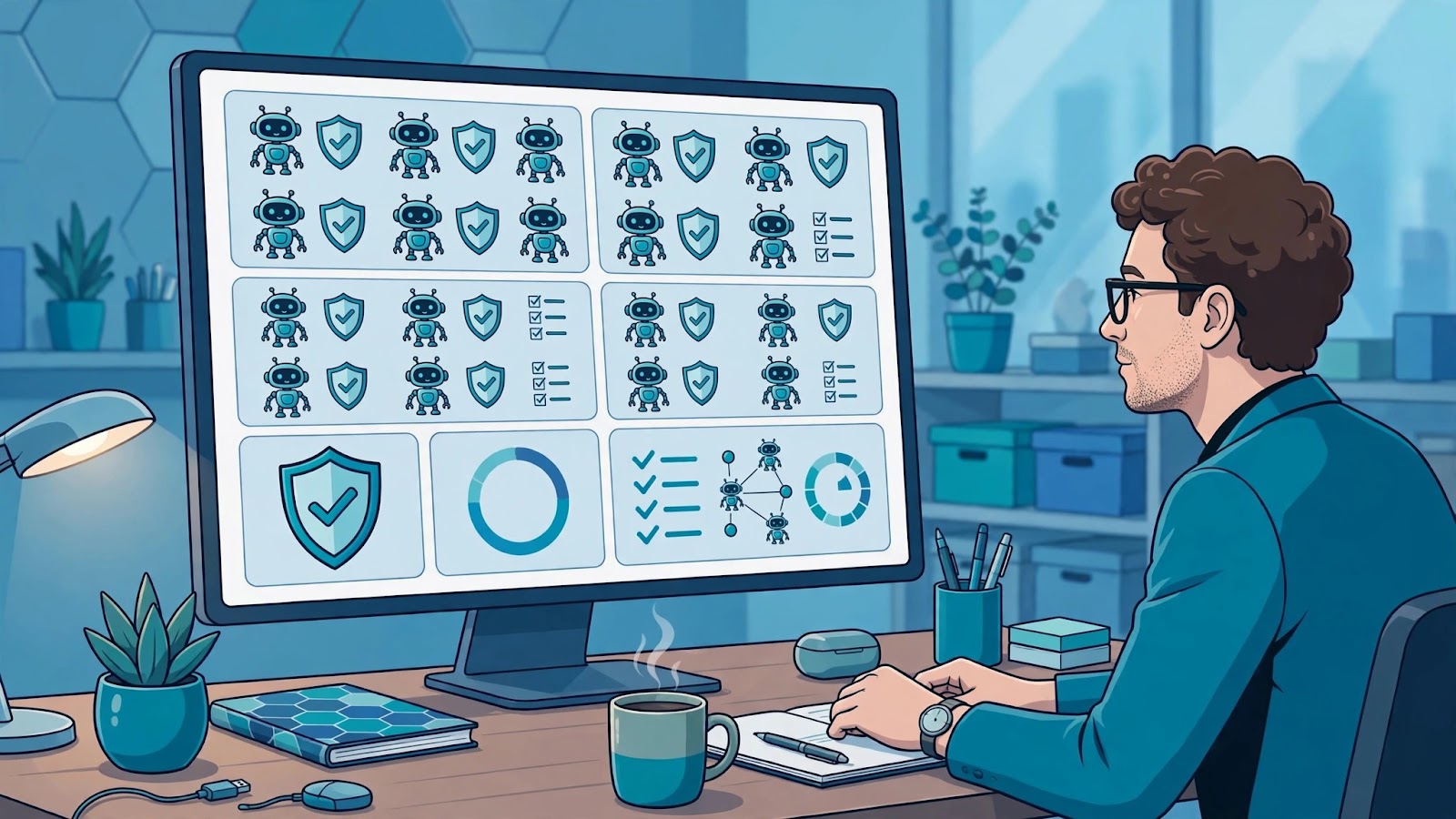
AI Agent Governance Services: How Freelancers Can Sell Agent Audits and Oversight in 2026
India's biggest IT firms are now selling "policing" for AI agents. Here is how freelancers can package the same oversight — audits, guardrails and monitoring — as a service small businesses can actually buy.
DIGGZA Team ·

How to Get Paid Filming Everyday Tasks for AI Robots: A Freelancer's Guide to Robot-Training Gigs (2026)
Ordinary work — cutting hair, cooking, folding laundry — is now paid AI-training work. Here is how robot-training gigs work, what they pay, and how to start safely.
DIGGZA Team ·