How to Verify a Freelancer Before You Hire: 7 Checks That Protect Your Project
By DIGGZA Team · Published · 7 min read
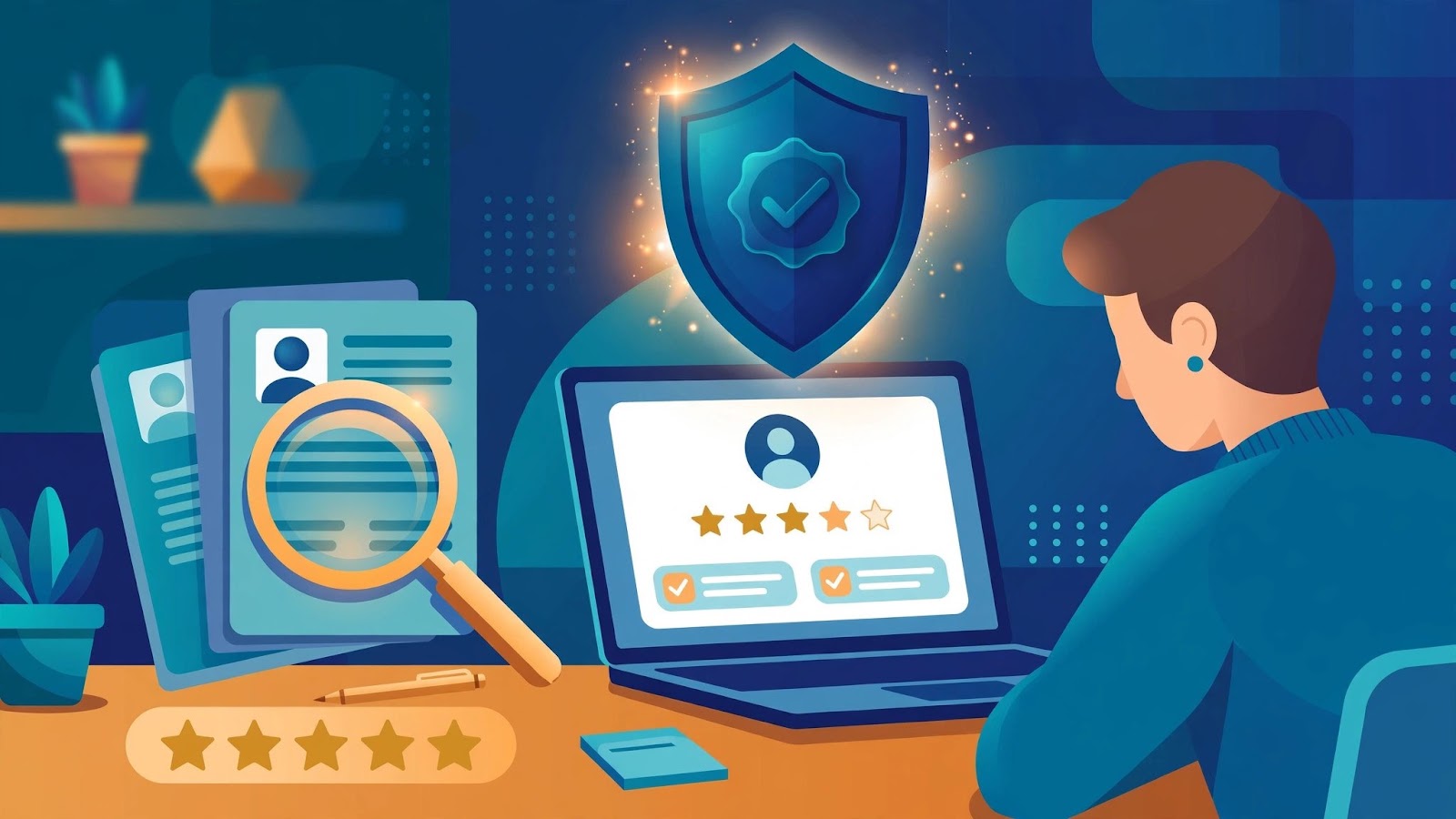
You need a logo designed, a website fixed, or a sales page written. You post the job, and within an hour you have forty proposals. Rates range from suspiciously cheap to eye-wateringly expensive, every profile claims to be an "expert," and half the portfolios look oddly similar. Hiring a freelancer in 2026 is easy. Hiring the right freelancer is the hard part.
The stakes are higher than they used to be. According to the PYMNTS Intelligence and WorkWhile Wage to Wallet Index, published in September 2026, 57.5% of people who needed a digital or creative task done tried AI tools first, while only 19.1% paid or hired someone. In other words, choosing a human freelancer is now a deliberate, considered decision — which makes it worth verifying that the person you pick is genuinely who they claim to be.
The good news: you don't need a private investigator. About twenty focused minutes and seven practical checks are enough to filter out fake profiles, inflated claims, and unreliable operators before any money changes hands.
Why freelancer verification matters more in 2026
Three things have changed the hiring landscape. First, generative AI can now fabricate an entire portfolio — sample logos, mock websites, even fake testimonials — in an afternoon. Second, review farming has gone industrial: some sellers buy batches of five-star reviews that all appear within the same week. Third, the sheer volume of freelancers online (the global freelance workforce now exceeds 1.5 billion people, per World Bank data cited across industry reports) means the cost of picking wrong is real: missed deadlines, leaked logins, half-finished work, and money that is very hard to recover.
Verification is simply the discipline of checking claims before you trust them. Here's how to do it.
The 7 checks to run before you hire
1. Confirm the freelancer is a real, reachable person
Start with the basics. Can you have a live video call with them? Do they have a consistent online presence — the same name, photo, and work history across two or three places? Are they reachable on a real channel like WhatsApp or a listed phone number?
Legitimate freelancers welcome a quick call; scammers dodge it. A five-minute video chat confirms identity, tests communication, and tells you more about reliability than a hundred profile badges. On directories that take verification seriously, this step is partly done for you: every identity document is reviewed by a human admin rather than an automated form.
2. Inspect the portfolio — don't just skim it
A portfolio of pretty screenshots proves very little. Click through to live websites, published articles, or real app listings. Then ask one disarming question: "Walk me through exactly what you did on this project." Real owners describe decisions, constraints, and trade-offs. Borrowers stumble.
For design work, a reverse image search takes thirty seconds and catches portfolios assembled from stock templates. For writing, paste a paragraph into a search engine to check it wasn't lifted. For code, ask for a repository link or a short screen recording of the project in action.
3. Read reviews like a detective
Reviews are only as trustworthy as the system behind them. Look for three things: verifiability (was the reviewer a real, paying buyer?), specificity (does the review mention the actual project, or could it describe anything?), and recency (a steady stream over months beats ten reviews posted in one week).
Pay special attention to how the freelancer responds to critical reviews. A calm, professional reply to a 3-star review tells you more about character than ten glowing 5-star ones. Platforms where every review comes from an email-verified buyer — and where freelancers can't delete or edit what buyers write — make this check far more reliable.
4. Look for a real verification badge
Not all badges mean the same thing. Some platforms award a "verified" label for confirming an email address — which proves almost nothing. What you want is identity verification: a government ID checked by a person, a verified contact channel, and a reviewed payment method.
On DIGGZA, for example, the Verified Freelancer badge is only issued after admin-approved identity checks, including ID proof and a selfie holding it. When you're browsing freelancers, that badge means a human on the platform's team has confirmed the person behind the profile is real. Treat unverified profiles with healthy skepticism, especially for high-value projects.
5. Start with a small paid test task
The single most reliable check is also the simplest: pay for a small slice of the real work before committing to the full project. A two-hour paid test reveals communication speed, quality standards, and whether they actually deliver on time — things no profile can prove.
Keep the test representative of the real job, pay fairly for it (good freelancers rightly refuse free "tests" that are really unpaid labor), and agree in advance that it's a trial. If someone delivers late or sloppily on a tiny paid task, you've saved yourself a much bigger headache.
6. Judge their communication before the contract
Notice how they handle the pre-hire conversation. Do they ask smart questions about your goals, or just quote a price? Do they explain their process and timeline in plain language? Do they push back when a request is unrealistic?
The best freelancers act like consultants: they clarify scope, flag risks, and set expectations early. Vague answers, pressure tactics ("this price is only valid today"), or reluctance to put anything in writing are all signals to walk away.
7. Lock in milestones, ownership, and payment terms
Finally, verify the commercial setup. Agree on written milestones with clear deliverables and dates — never "pay 100% upfront and hope." Clarify who owns the work product (you should, once paid in full), what happens if deadlines slip, and how revisions work.
Use payment methods with a paper trail. Avoid wire transfers to personal accounts or crypto payments to strangers; if a freelancer insists on untraceable payment before any work exists, that is the reddest of flags.
Red flags: a quick-reference table
| Red flag | What it usually means | What to do |
|---|---|---|
| Refuses a video call | Identity may not match the profile | Don't proceed without one |
| Portfolio has no live links | Work may be borrowed or AI-generated | Ask for proof or a screen share |
| All reviews posted in one week | Reviews may be purchased | Weight them at zero; look elsewhere |
| Demands full payment upfront via untraceable method | Classic advance-fee scam pattern | Walk away immediately |
| Price far below market rate | Bait pricing, or quality far below usable | Ask what is excluded; get a second quote |
| Vague about process and timeline | No real workflow; likely to ghost | Require a written plan before hiring |
| No verifiable identity anywhere | Nothing to hold them accountable | Prefer admin-verified profiles |
Your 10-minute pre-hire checklist
- Had a live video or voice call — they are a real person
- Clicked at least two live portfolio links — the work is real
- Read reviews for verifiability, specificity, and recency
- Confirmed a genuine identity-verification badge, not a self-claimed one
- Ran (or planned) a small paid test task
- Received clear answers on scope, timeline, and revisions
- Agreed on written milestones and a traceable payment method
Frequently asked questions
How can I check if a freelancer's portfolio is real?
Click through to live work, ask them to walk you through their role on a specific project, and use reverse image search on design samples. Genuine freelancers answer detailed questions easily; borrowers can't.
Should I ask a freelancer for ID proof?
Asking a stranger for ID documents directly is awkward and risky for both sides. It's far better to hire through a platform where identity verification is handled by the platform's admin team — you get the assurance without handling anyone's personal documents yourself.
Is it safe to pay a freelancer in advance?
A small deposit or milestone-based payments are normal; 100% upfront through an untraceable method is not. Tie every payment to a delivered milestone and keep a written record of the agreement.
What is a verified freelancer badge actually worth?
It depends on what was verified. An email-confirmation badge is nearly worthless; an admin-reviewed identity check — ID document, selfie verification, and confirmed contact channel — meaningfully reduces your risk. Always check what a badge required before you trust it.
The bottom line
Verifying a freelancer isn't about distrust — it's about making trust cheap. Seven checks, about twenty minutes, and you go from hoping you hired well to knowing you did. In a market where AI can fake almost anything, the freelancers worth hiring are the ones whose identity, work, and reputation all check out.
If you'd like to skip most of this homework, start with profiles that have already passed admin-reviewed identity checks. You can browse verified freelancers on DIGGZA, where every badge means a real person reviewed real documents — so your twenty minutes can go toward judging the work, not the identity behind it.
freelancer verificationhire freelancers safelyfreelance scamsverified freelancersclient tipstrust signals